
The retail grocery industry is a large and competitive market that includes national chains, regional supermarkets, independent grocery stores, warehouse clubs, and online retailers. Large companies such as Walmart, Kroger, Costco, and Albertsons account for a significant share of grocery sales, but thousands of smaller stores also serve local communities.
The most visible cooperatives in the grocery industry are food co-ops, which are owned by their members and often focus on local food, healthy products, and community-centered values. However, cooperatives also exist in other forms as well. Purchasing cooperatives allow independent grocery stores collaborate on product purchasing, reduce costs, strengthen their buying power, and compete more effectively with larger retail chains.
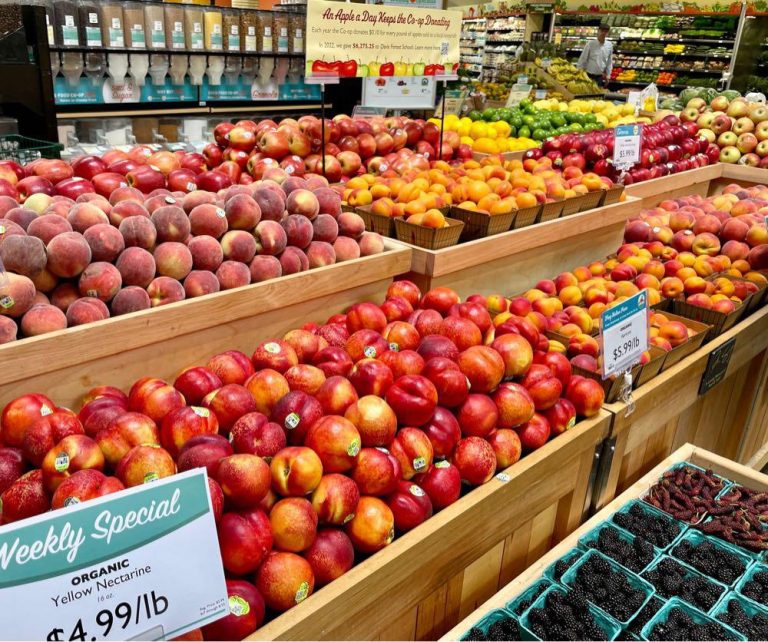
Food Co-ops
Food co-ops are grocery stores that are owned by the people who shop there. Most food co-ops are known for selling natural and organic foods, and this part of the co-op sector has grown and evolved significantly over the past 50 years. Food co-ops can also be found in conventional grocery markets, particularly in smaller communities. In many cases, residents have started a co-op to bring back a local grocery store after a long-standing store closed, helping maintain access to food and supporting the local economy.
Like all grocery stores, food co-ops operate in a highly competitive industry with very small profit margins. They must balance affordable prices with the needs of their members and customers. Co-ops also have to adapt to changing consumer expectations, including online ordering, new shopping habits, and shifts in how people prepare and eat food. To remain successful, they continually adjust their products, services, and operations to meet the needs of their communities.
Benefits of shopping at a food co-op:
- Local ownership and community investment – Revenue is reinvested in the store, employees, local suppliers, and community programs.
- Support for local farmers and producers – Many co-ops prioritize purchasing products from local and regional farms, food makers, and other small businesses. This helps strengthen the local economy and keeps food dollars circulating in the community
- Access to healthy, high-quality foods – Food co-ops are often known for offering a wide selection of fresh produce, organic foods, bulk foods, and products that meet a variety of dietary needs and preferences.
- Commitment to sustainability – Many co-ops emphasize environmentally responsible practices, such as reducing waste, supporting sustainable agriculture, and offering products with fewer packaging materials.
Examples of Grocery Cooperatives
The Willy Street Co-op started in 1974, when a group of people wanted to provide quality food for their families. They began the Co-op in order to find and sell fresh, local, organic, and natural foods. Willy Street Co-op has expanded to offer more products, opened a production kitchen and has three stores in and around Madison, Wisconsin.
Since 1970, Outpost Co-op has served the Milwaukee area through four neighborhood grocery stores. The co-op is owned by more than 23,000 people from southeastern Wisconsin and employs nearly 450 workers. Outpost is a union workplace represented by UFCW Local 1473. It is also one of the largest food co-ops in the United States and ranks fifth among cooperatively owned natural foods grocery stores based on sales.
Menomonie Market Food Co-op is a community-owned grocery store with locations in Menomonie and Eau Claire. Founded in the 1970s, it is owned by more than 5,500 community members and focuses on local, organic, and sustainably produced foods while supporting regional farmers and the local economy.
Wholesale and Distribution Purchasing Cooperatives
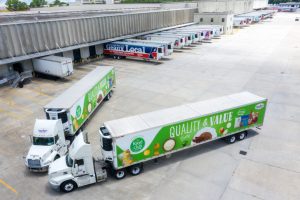 There are numerous examples of the cooperative model on the wholesale and distribution side of the grocery industry. As the industry evolved, independent grocers joined together to form purchasing cooperatives that allowed them to compete more effectively with larger chains. By combining their purchasing power, these cooperatives were able to negotiate better prices and purchase products and supplies at lower costs, creating economies of scale that benefited their member stores.
Examples of Wholesale Food Cooperatives
Associated Wholesale Grocers (AWG) is the nation’s largest cooperative food wholesaler. Founded in Kansas City in 1924, the organization began when 13 independent grocers joined forces to combine their purchasing and advertising power. Incorporated in 1926, AWG was built on the principle that independent retailers could achieve greater success by working together to increase their collective buying power and strengthen their ability to compete. Today, the cooperative serves more than 3,500 independently owned grocery stores and supermarkets across 33 states.
Wakefern is the nation’s largest retailer owned cooperative that provides purchasing, distribution, and other services to independently owned grocery stores throughout the Northeast. By working together, these stores can achieve the benefits of scale while remaining locally owned and operated.
National Co+op Grocers (NCG) is a cooperative that supports food co-ops across the United States. Its members include 169 food co-ops operating 241 stores in 40 states, with more than $2.8 billion in annual sales and over 1.3 million consumer-owners. NCG helps independent food co-ops work together to gain many of the advantages of a larger grocery chain while maintaining local ownership and control. The cooperative provides purchasing, marketing, data, and operational support that helps member co-ops lower costs, improve efficiency, and strengthen their ability to compete in the grocery marketplace. By combining their resources, food co-ops can offer greater value to their owners, shoppers, and communities while staying true to their individual missions and local identities.
Resources
2021 Cooperative Governance Research Initiative Food Co-op Findings. UW Center for Cooperatives, 2023.
The FCI Guide to Starting a Food Co-op. Food Co-op Initiative, 2017.
Capital Campaign Workbook: A Guide to Raising Member Capital for Retail Food Co-ops. Food Co-op Initiative, 2016.
Accounting Best Practices for Food Co-ops. Wegner CPAs/National Cooperative Grocers Association.
Bringing Grocery Stores to Low-Income Urban Food Deserts. Food Co-op Initiative in Cooperative Grocer Magazine, 2015.
The Twin Cities Cooperative Local Food System: A Case Study and Commentary. Cooperative Development Services, 2014.
Buying a Business to Start a Co-op: A Case Study of Food Co-op Conversions. Food Co-op Initiative, 2013.
A Study of Co-op Business Development in Wisconsin and Minnesota: Fourteen Recent Start-ups in the Food and Agricultural Sectors. UW Center for Cooperatives, 2013.
Case Study: Willy Street Grocery Cooperative. UW Center for Cooperatives, 2011.
Food Co-op Feasibility. Food Co-op Initiative, 2010.
Legal Primer: For Formation of Consumer-Owned Food Cooperatives. Food Co-op Initiative, 2010.
Keys to Success for Food Co-op Start Ups in Rural Areas: Four Case Studies. USDA Research Report 208, 2005.
Manual for Student-Run Food Cooperatives. Cooperative Food Empowerment Directive.